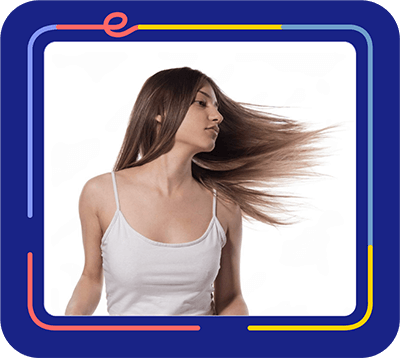

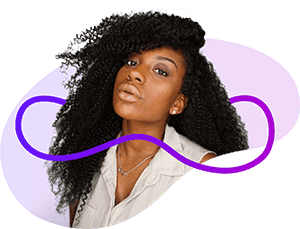
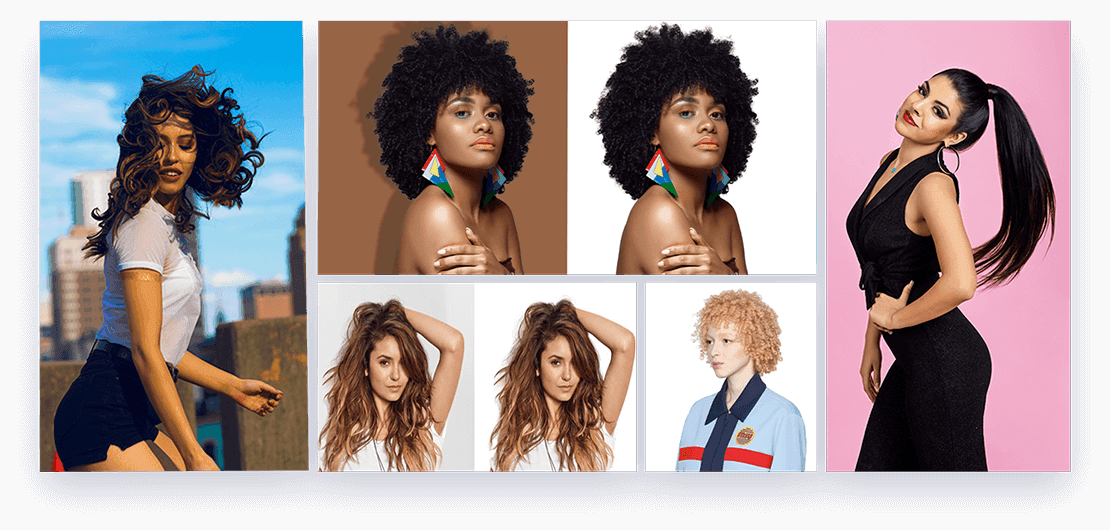
In digital image editing, Photoshop hair masking is a technique that lets graphic designers separate and isolate hair from its background. Hair is one of the most difficult elements to accurately mask because it is fine, wispy, and transparent. This makes the process of masking hair particularly difficult.
A graphic designer or business like CLIPPING PATH SOURCE, which employs sophisticated Photoshop masking techniques to isolate and separate hair from its background, is usually involved in a professional Photoshop hair masking service. This can be accomplished in a number of ways, including by manually selecting the hair and creating a mask with the pen tool or by using the channel masking method, which defines the mask by using the image's luminance.
Enabling graphic designers to precisely control hair and manipulate it apart from its background is the aim of hair masking. The masked hair can be combined with a new background, edited, and manipulated in a variety of ways, including color correction, resizing, and the application of special effects, opening up a world of creative possibilities. Since the masked hair can be saved as a distinct layer, combining it with other compositional elements is simple.
In the domains of fashion, beauty, and portrait photography, where hair must frequently be separated from the background to enable compositing with other elements, Photoshop image masking services are especially helpful. For instance, to improve the visual appeal of portrait photography, the subject's hair can be masked and set against a different background. In fashion photography, it is possible to create visually striking compositions by masking images and combining them with other elements.
In order to guarantee that the hair has sharp, clean edges and that the mask correctly separates the hair from the background, Photoshop hair masking can be a laborious and meticulous process. This calls for a talented and seasoned graphic designer who can produce excellent, polished results that will make your photos stand out.
To sum up, Photoshop image masking is an essential digital image editing technique that enables graphic designers to precisely control and manipulate hair without affecting its background. High-quality, polished results that will make your photos stand out from the crowd can be obtained with a professional Photoshop hair masking service. Whether you want to improve the aesthetic appeal of your fashion shoots, portraits, or any other kind of image, a professional hair masking service can deliver the outcomes you require.
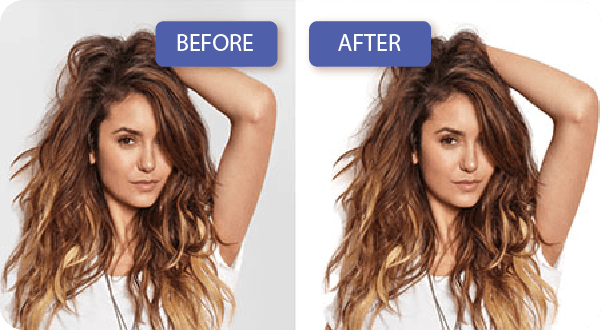
There are several tools and techniques commonly used for hair masking in Photoshop, including:
These tools and techniques can be used in various combinations to achieve the best results for hair masking in specific images.
Photoshop offers a variety of hair masking techniques, such as:
Pen Tool Masking: This technique creates a mask by manually tracing the hair using Photoshop's pen tool. Because the mask needs to be made precisely to separate the hair from the background, this technique calls for a high degree of skill and attention to detail.
Channel Masking: This technique makes a mask out of the image's luminance. Because it can precisely distinguish the hair from the background, even in intricate and challenging images, this technique is frequently used for hair masking.
Layer Masking: By applying a layer mask to obscure or expose specific areas of the image, layer masking can be used to isolate hair. Soft, gradual transitions between the background and the hair can be achieved with this technique.
Transparency Masking: This technique determines the hair's transparency by making a grayscale mask. The transparency of the hair increases with the grayscale values. A mask that precisely distinguishes the hair from the background can be made using this technique.
Select and Mask: This Photoshop feature combines multiple masking techniques to produce a mask that precisely distinguishes hair from the background. To produce a precise and accurate mask, this method makes use of color refinement, edge detection, and other techniques.
In order to separate the hair from the background and enable more accurate editing and manipulation, the photo editing industry usually requires hair masking services or background removal from hair. The following are some instances of people or businesses that might need background removal or hair masking services:

In order to produce high-quality photographs with flawlessly edited hair, photographers need hair masking services. This is particularly crucial for portrait, beauty, and fashion photography.
Photographers require hair masking services to create high-quality images with perfectly edited hair. This is especially important for fashion, beauty, and portrait photography.
To ensure that the hair in the photos is expertly edited and appears its best, advertising agencies may need background removal or hair masking services when creating advertisements for their clients.
For headshots or promotional photos for their portfolios, actors, actresses, models, and other performers frequently require hair masking or background removal services.
Actors, actresses, models, and other performers often need background removal or hair masking services for headshots or promotional photos for their portfolios.
In general, hair masking or background removal services may be necessary for anyone in need of expert image editing and manipulation services that include hair or background removal from the image. It enables accurate editing, which improves the final photos' polish and professionalism.
In order to isolate particular areas of an image and enable more accurate editing and manipulation, image masking services are commonly utilized in the photo editing industry. In the following circumstances, image masking services might be required:
All things considered, image masking is an essential tool for anyone in need of expert image editing and manipulation services. It enables accurate editing and control over the finished image, giving it a more polished and expert appearance.
A number of variables can affect the cost of image masking services. These variables include the complexity of the object and its background, the color of the background, and the quantity of sections that must be masked.
For example, it can be more difficult and time-consuming to separate objects from a similar-colored background than it is to separate them from a contrasting background. This may have an impact on the project's final cost.
Because each image masking project is different, the cost will vary depending on the particular needs of the project. Standard pricing guidelines, on the other hand, can guarantee that prices are reasonable and uniform among various designers.
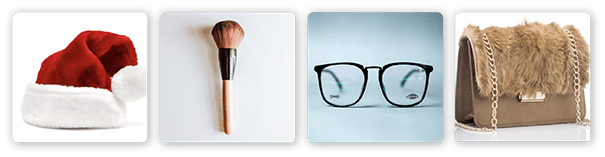
The term "simple images" refers to images with smooth edges and simple, uncomplicated shapes. These shapes could be simple outlines of people or objects, or they could be geometric shapes like triangles, squares, or circles.
However, more intricate features like fur, hair, or transparency might be present in some areas of these pictures. A picture of a cat, for instance, might be deemed simple if the majority of the image consists of a smooth, rounded shape, with only a small portion displaying the cat's whiskers or furry ears.
A tool or service that carries out this masking procedure in an easy-to-understand manner would be considered a simple masking service. These services usually provide an easy-to-use interface that allows the user to upload an image and apply a mask. Using tools like brushes or selection tools, the user would indicate which areas of the image they wanted to keep visible and which parts they wanted hidden.
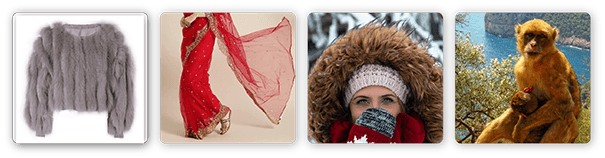
A simple masking service would be a tool or service that performs this masking process in an understandable way. The user can upload an image and apply a mask using these services' typically user-friendly interface. The user would specify which portions of the image they wanted hidden and which they wanted to remain visible using tools like brushes or selection tools.
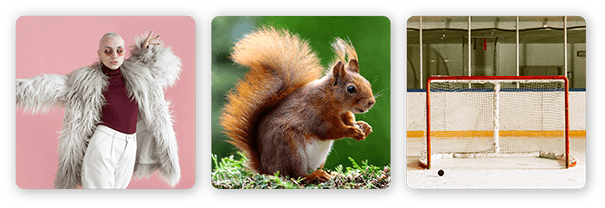
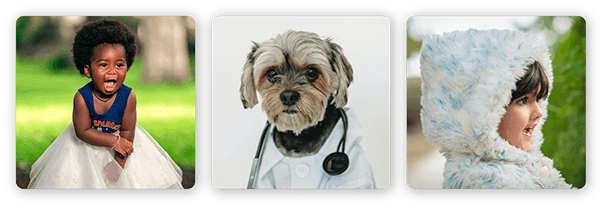
Images in this category frequently show several subjects, like people or animals, in one picture. They may also have difficult-to-control elements, like shadows or multicolored backgrounds, which require a combination of image masking techniques to get the desired effect.
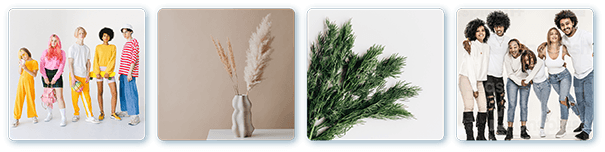
In order to overcome the difficulties and get the intended result, a variety of image masking techniques are required for super complex image masking projects, which are comparatively uncommon and involve images with incredibly intricate borders.